When a thought keeps repeating, it can feel as if the whole day has narrowed around it. A reset does not have to be dramatic. It can begin by returning attention to what is already here.
In brief: This is a small practice for moments when one thought, task, or conversation feels as if it has filled the whole room. It does not require you to clear your mind or feel calm. It gives attention one ordinary, steady place to land.
When a small reset may be useful
You might try this after reading a message that keeps replaying, before moving from one task to another, or when you notice that you have been scrolling or worrying without really arriving anywhere. You do not need a quiet room, special equipment, or a perfect mood.
If any part of the practice feels uncomfortable, you can skip it, change it, or stop. The aim is not to do it correctly. The aim is to make the next few minutes a little more specific.
Look for three steady details
Notice three things in the room that are not asking anything of you: a line of light, the edge of a table, the weight of a cup, a colour near the window, or the shape of a familiar object. There is no correct detail to choose.
You are not trying to make the thought disappear. You are reminding attention that the thought is not the only thing present.
Let the body catch up
Feel where your feet meet the floor or where your back meets a chair. If that feels neutral enough, take one unhurried breath. You do not need to relax the body on command. You can simply name one point of support: floor, chair, wall, fabric, warmth.
If body-focused attention is not comfortable today, return to the room instead. Look for one stable object and describe its colour, texture, or shape. A reset can take different forms.
Return to the next kind action
After the pause, choose one small next thing: drink water, open a window, send one necessary message, write down the thought for later, or stand up and change rooms. The next action does not have to solve the day. It only has to be the next honest thing you can do.
For a longer structure, A five-minute reset for an overfull day offers five small minutes of attention. If the thought is connected to a feeling you cannot name yet, How to name a feeling without rushing to solve it may be a useful next read.
A note of care
This is a general self-reflection practice, not medical, mental health, or emergency advice. If you feel overwhelmed, unsafe, or unable to manage daily life, consider seeking support from a qualified local professional or an appropriate emergency service.
Why the room matters more than the thought
A racing thought pulls attention somewhere else entirely — into a memory, a future conversation, a worry that hasn’t happened yet. The room you’re physically in, by contrast, is simply available. It doesn’t require solving anything. Returning to it isn’t about winning an argument with the thought; it’s about giving attention a place to rest that isn’t inside the loop.
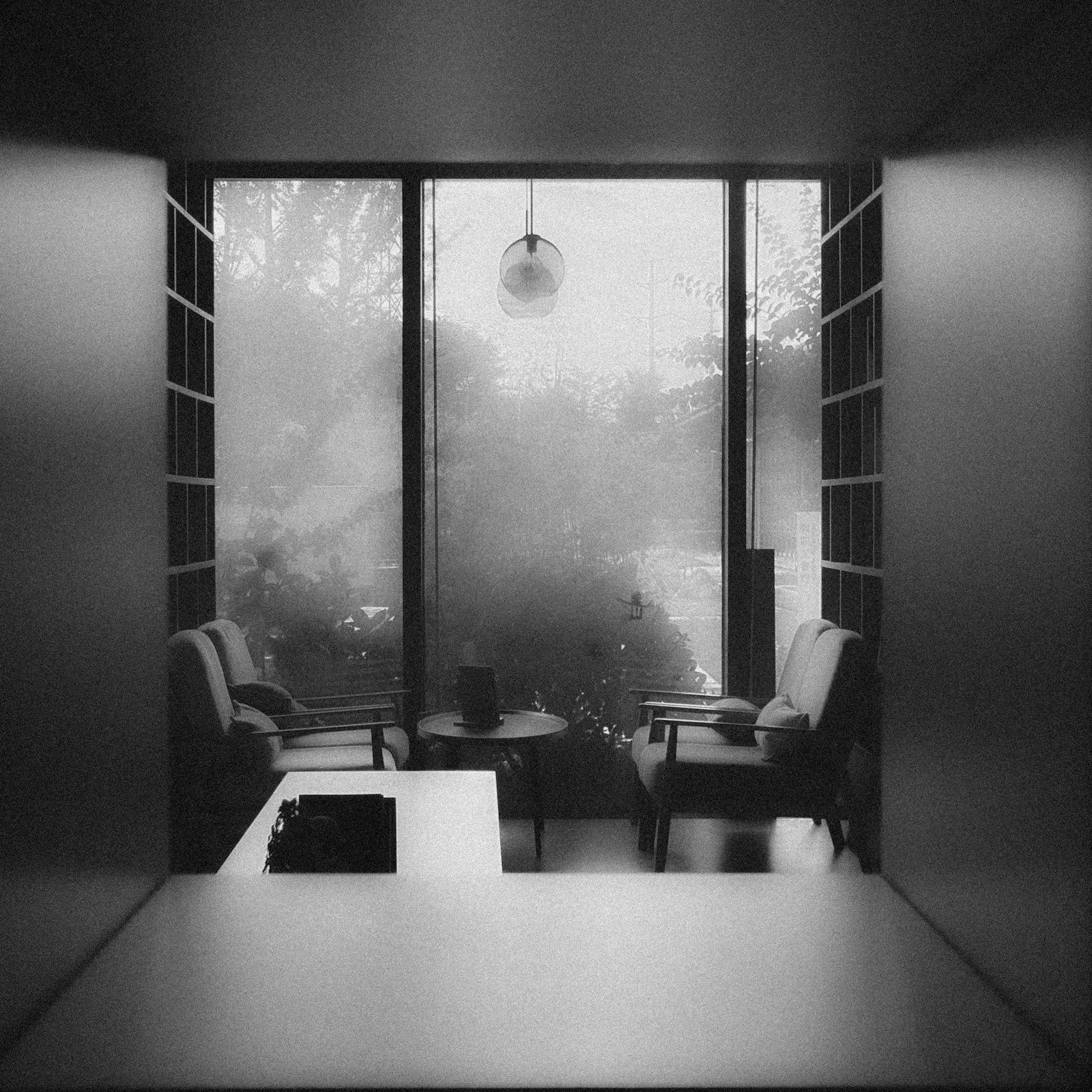
Returning to the room you are in doesn’t require a calm mind, only a moment of attention.
What this looks like in practice
Notice three ordinary things in the room — the texture of a surface, the sound in the background, the temperature of the air. None of it needs to be meaningful. The goal isn’t insight, just a brief anchor. Repeated often enough, this becomes a fast, low-effort way back to the present moment, without needing a fully quiet mind first.
There’s no fixed number of times this needs repeating before it counts as working. Some days it takes once. Other days the mind wanders back within a minute, and returning to the room again is simply part of the practice, not a sign that it failed.
More on returning to the room you are in
For a related read on returning to the room you are in, see why trying hard to fall asleep can keep you awake.
For more background on this idea, mindfulness is a useful starting point.
For general guidance on managing stress, see NHS: Get help with stress.